
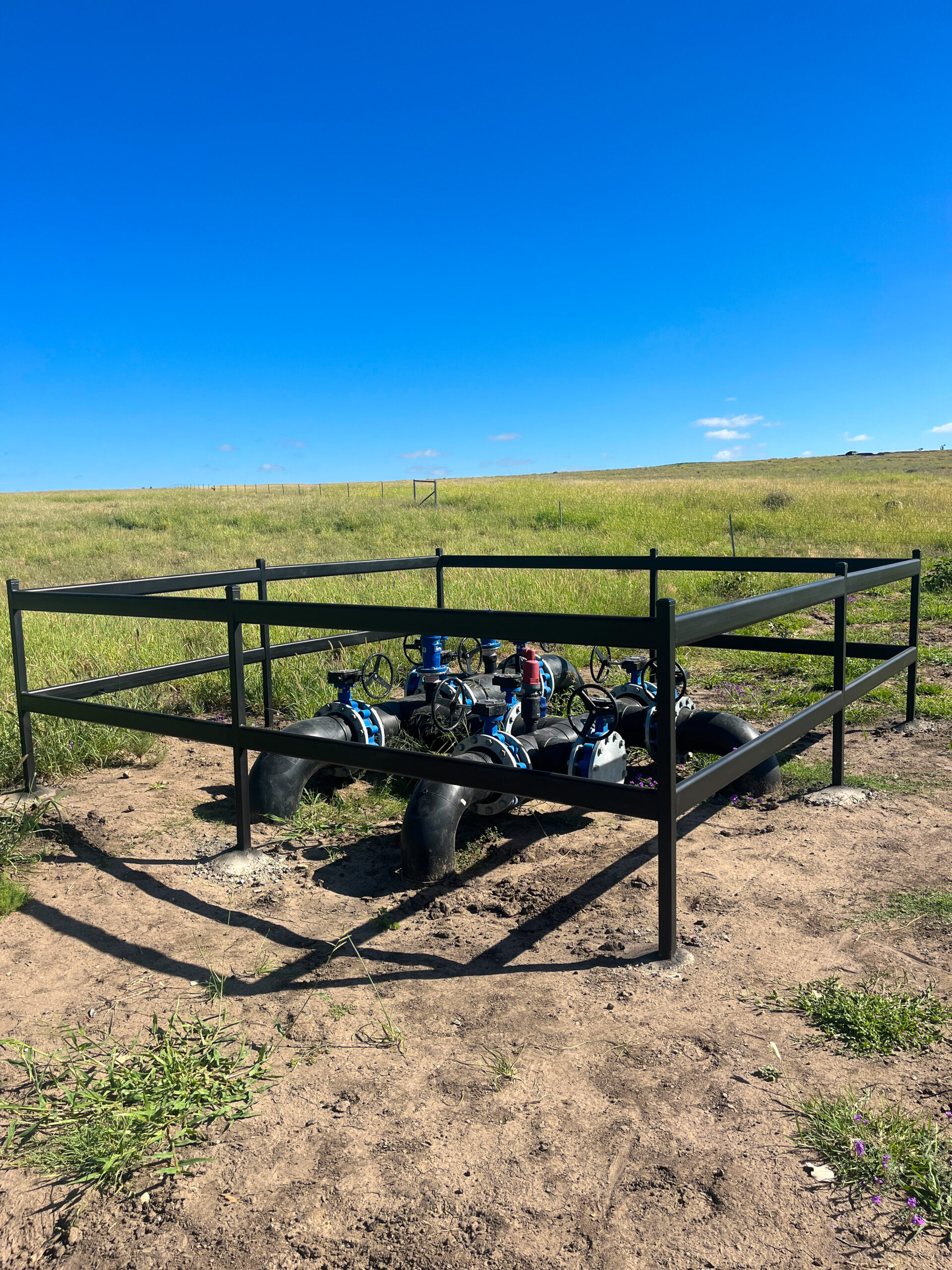
The dry Australian landscape makes it incredibly difficult for crops to thrive – often leading to depletion or complete crop failure. Farmers can’t solely rely on rainfall to replenish their crops, as patterns can be unpredictable and often quite scarce. And this is where the water reticulation process comes into play. Beneath the surface of countless fields lies a carefully engineered network that delivers water exactly where it is needed most. This is a critical process that helps to aid the survival of Australian crops, and keeps modern agriculture efficient, sustainable, and reliable.
As demand for food continues to grow across Australia, farmers need a water reticulation system that is reliable and allows them to take control of their fields. The need for smarter infrastructure is becoming increasingly more important across the agriculture industry, with well-executed water reticulation projects playing a vital role in supporting Australian farming industries.
At Sunstate Pipelines, our team of dedicated professionals specialise in installing water reticulation systems for agriculture that are built to last, and structured accordingly to ensure that crops receive the right amount of water all year round. To help aid your decision, our team has curated a guide to breakdown all of the aspects associated with the water reticulation process to ensure that it is the right fit for your business.
How Does the Water Reticulation Process Work?
Water reticulation is becoming increasingly popular amongst Australian farmers solely because of their agricultural benefits. At its core, the water reticulation process is about moving water from a reliable source to wherever it is needed the most. Whilst the concept may sound simple, it requires extensive experience and pioneered engineering to execute effectively.
The process typically begins at a major water source that can be connected to your system (i.e. rivers, dams, or bores). From there, the water is transported throughout a series of networked pipes – most commonly high-density Polyethylene (HDPE). HDPE is often chosen because of its flexibility, durability, and long lifespan in harsh Australian conditions.
Once these pipes have been properly installed, the pumps are then used to generate the pressure required to move water across large distances and varying elevations. Because the water does not flow naturally uphill, the pumps help to generate enough power to propel it consistently across the entire network. Pressurisation must be adjusted according to the elevation of the system, and magnitude of the ascent.
Once the pumps and networks are fully installed and the pressurisation has been adjusted, the valves and controls help to regulate the flow of water across your property, directing water directly to crops or other specific zones. This allows farmers to effectively manage the distribution across their property with accuracy and precision, reducing waste and improving efficiency in the process.
And the result? A controlled, scalable system that helps revitalise and maintain survival of your crops all year round in even the most challenging and unforgiving landscapes.
How to Choose the Right Distribution Method for You?
Choosing which distribution method is the best fit for your agricultural business is pivotal, and must be decided before any work commences. Once the water reaches your farm, the next important step is distributing evenly across your crops. It is important to note that not all methods are equal, and selecting which one works best for you is vital to maintain efficiency and effectiveness.
There are two commonly used systems in water reticulation projects, and these are drip irrigation and overhead sprinklers. Drip irrigation delivers water slowly and directly to the base of each individual plant, helping to minimise evaporation. This method is ideal for vineyards, orchards, and row crops, as they require structure and organisation of crop fields. Overhead sprinklers however are exactly as the name intends – water is dispersed over a wider area, mimicking rainfall. This method is often better suited for larger areas where uniform coverage is required.
Each of these methods have their place and advantages, and it is up to you to decide which one would be most beneficial for your property. Designing a system that balances both coverage and efficiency is paramount to extracting the most out of your system, and ensuring agricultural benefits.
Understand the Costs Associated with a Water Reticulation System Implementation
The costs of implementing a water reticulation varies significantly from project to project. There are many factors that contribute to the total cost of installation, including scale, distribution method, and level of automation. Drip irrigation systems are often more expensive and have higher upfront investment costs due to the need for extensive piping, filtration and emitters. However, this form is highly effective at delivering long-term savings throughout reduced water usage and lower operating costs.
In contrast, overhead sprinklers are a cheaper alternative and tend to be more cost effective. Long-term costs and energy expenses after installation are higher than those of drip irrigation systems due to wider coverage and consistent evaporation. Additional costs across both methods include maintenance, pumps, pressure and automation technologies, and these should be carefully considered before making any final decisions.
For your specific water reticulation needs, the most cost-effective solution ultimately depends on how much you are willing to spend on the initial infrastructure and invest in water savings across an extended period of time.
Choose SunState Pipelines for Your Next Water Reticulation Project
Whether you are planning to upgrade your existing infrastructure or are entirely new to the idea and need guidance, trust SunState Pipelines to point you in the right direction! Our specialised team delivers high-performance water reticulation systems that are engineered to work optimally to your size and scale. From initial design to final installation, our team will ensure that your system is built for durability, efficiency, and sustainability. Investing in a driven water reticulation company will save you money in the future and maximise the potential of your next project!
Ready to start your journey towards a smarter water system? Call us today and let’s discuss your next water reticulation project.